










bra size calculator
Stop struggling with uncomfortable bras. Get precise cup and band measurements using US, UK, or EU standards for a perfect, supportive fit every day.
- Relaxed Fit
- Location
- Size
- Cup
- USA
- UK
- Europe
- France
- Italy
- Australia
- Japan
- Firm Fit
- Location
- Size
- Cup
- USA
- UK
- Europe
- France
- Italy
- Australia
- Japan
About bra size calculator
Are you tired of inaccurate bra size results? Our advanced Bra Size Calculator uses a proprietary algorithm designed to deliver unmatched accuracy, ensuring you find the perfect fit every time. Unlike standard calculators, our tool takes into account the latest sizing standards and real-world data, providing results you can trust.Whether you're shopping in the USA, UK, France, EU, Italy, or Australia, our calculator instantly converts your measurements into the correct size for each country's system.
how to measure bra size?
For the most accurate results, measure without a bra or shirt on.
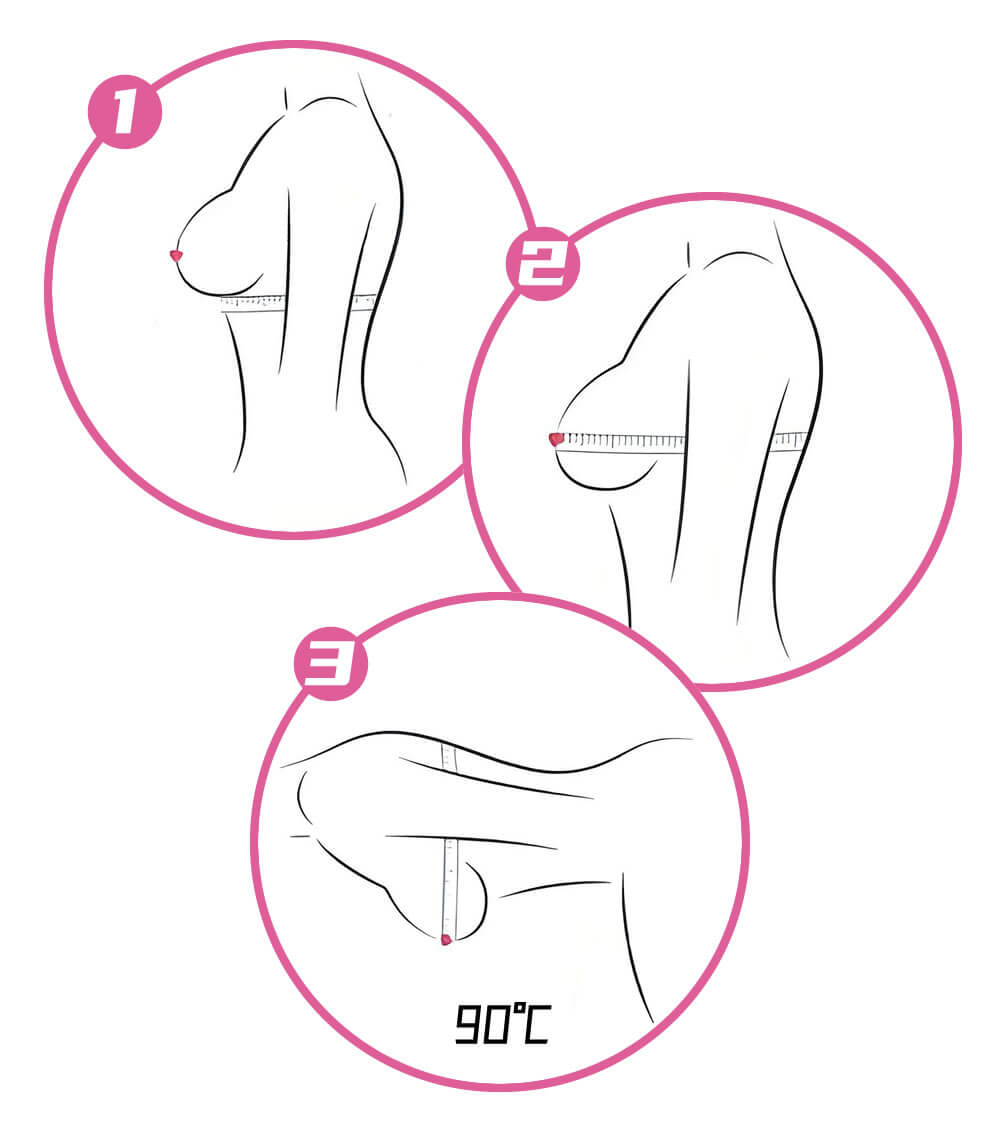
- Measure your underbust - Place the measuring tape flat against your skin – directly under your breasts. Make sure that the tape runs horizontally around your torso and is at the same height under your breast as on your back. Allow your arms to hang down naturally and breathe as usual. Pull the tape as tightly as you want your bra to fit.
- Measure your upright bust - Place the measuring band flat against the largest part of your breasts – that will usually be at the height of the nipples. Once again, make sure that the tape is horizontal and at the same height on your front and back, and that you stand up straight.
- Measure your leaning bust - To accurately measure your leaning bust, lean forward to a 90-degree angle and let your breasts hang naturally. Then, wrap a measuring tape around the fullest part of your bust, ensuring it's parallel to the ground and not too tight.
Should I choose Firm Fit or Relaxed Fit?
- People whose underband and bust measurements differ by 10 inches or more often prefer a technical fit. With heavier breasts, a snug, technical fit is typically needed for proper support.
- People whose underband and bust measurements differ by 5 inches or less tend to prefer a relaxed fit because their breasts don't have a lot of weight that needs supporting.
- People whose underband measures 44 inches or above also often choose a technical fit. With softer body types (more "squish"), a firm band is better for added security (+0 band size: their band size is the same as their band measurement).
- In all other cases, it's up to personal preference. The less lift and support you want, the more relaxed your bra can fit.
What bra size am I?
You can measure your bra size using our size calculator. Our calculator uses a different algorithm for every size range, to ensure every size range gets the perfect fit. Different from most calculators, it considers your breast fullness and prioritizes personal preference.
Our calculator gives you two measurements, your firm fit (called "technical fit" in this article) and your relaxed fit. The calculator offers suggested advice according to the calculation results.
The size you recommended is quite different from what I normally wear. My current bra fits reasonably well. Could there be an error?
We recommend trying the size suggested by our calculator, even if it's not what you usually wear. Our tool is accurate within one size about 80% of the time.
If you're experiencing issues like straps slipping, cup overflow, or a band that rides up, it may be time to switch sizes. We're confident you'll notice a big improvement.
Many users have switched from sizes like 38C to 36DDD, 46DD to 42K, or 34D to 30G. A properly fitting bra will lift, separate, and support your bust comfortably—without any pinching or squashing.
Real-World Usage Scenarios
- Transitioning from the -Add 4- Method - Traditional sizing often suggests adding 4 or 5 inches to your underbust measurement, which results in a loose band and zero support. Use this tool to find your technical size based on your actual ribcage dimensions for better lift and posture.
- International Shopping - UK and EU Brands - Shopping for brands like Panache (UK) or Aubade (FR) from the USA can be confusing due to different cup progressions. Our calculator instantly converts your measurements into the correct regional format, ensuring you order the right size every time.
- Post-Pregnancy and Weight Changes - Body fluctuations significantly alter breast tissue density and ribcage width. By using three different bust measurements (upright and leaning), you can accurately track your current volume and find a fit that accommodates your new shape.
- Solving Chronic Shoulder and Back Pain - If your bra straps are digging in, your band is likely too large and not providing the required 80% of support. This tool helps identify the correct firm-fit band size to shift the weight from your shoulders to the band.
Frequently Asked Questions
Why do I need to measure while leaning forward?
The leaning bust measurement captures the full volume of your breast tissue without the compression of gravity. This is essential for projected or pendulous shapes where a standing measurement might underestimate your actual cup size.
Why is the result different from what I buy in stores?
Most high-street stores use outdated sizing charts to fit customers into a narrow range of stock. Our algorithm uses modern technical standards that prioritize the band-to-bust ratio, which usually results in a smaller band and larger cup than you expect.
When should I choose -Firm Fit- over -Relaxed Fit-?
Choose Firm Fit if you have a larger bust (G cup and above) or a 'squishy' ribcage, as you need the band to stay anchored for support. Relaxed Fit is better for smaller busts or those with very little body fat around the ribs where a tight band may feel restrictive.
Do I need to wear a bra while taking these measurements?
No. For the most accurate calculation of your actual body volume, you should measure against bare skin. A bra—especially a padded one—distorts your natural shape and leads to inaccurate results.